
European license plate country codes and the blue EU band
What the letters in the blue strip on a European plate mean, every country's code with an example plate, and the rules behind the band, from each country's own plate law.
The short answer: the letters in the blue band on the left of a European license plate are the code of the country where the car is registered. D is Germany, F is France, I is Italy, E is Spain, NL is Netherlands and B is Belgium. Of the 37 European countries in our data, 26 put the EU band, with its ring of yellow stars, on their standard plate; 5 use a band of their own, and 6 have no band at all.
Below is every country code you'll find on a European plate, an example plate for each, and what the band means legally. Every country links to its own page, with all its plate formats and the law behind them.
Every country code on European plates
-
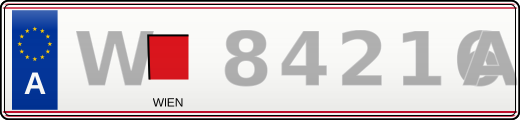 A
Austria
EU band
-
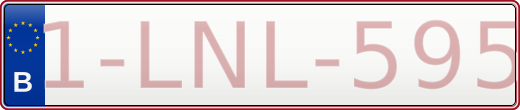 B
Belgium
EU band
-
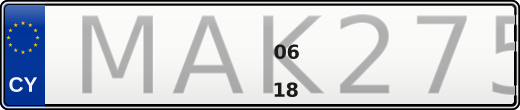 CY
Cyprus
EU band
-
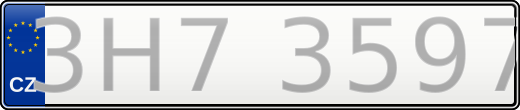 CZ
Czechia
EU band
-
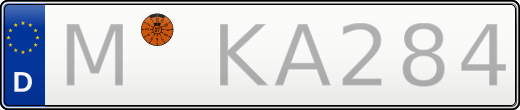 D
Germany
EU band
-
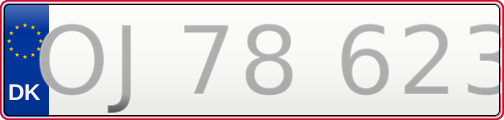 DK
Denmark
EU band (optional)
-
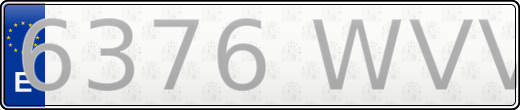 E
Spain
EU band
-
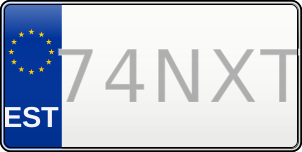 EST
Estonia
EU band
-
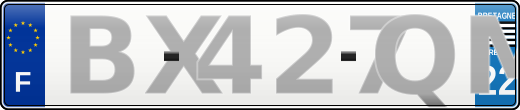 F
France
EU band
-
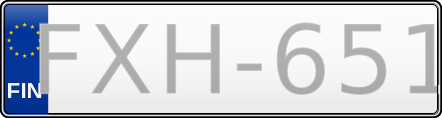 FIN
Finland
EU band
-
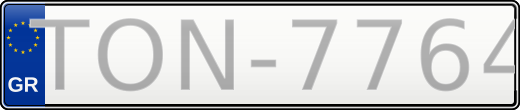 GR
Greece
EU band
-
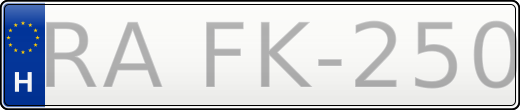 H
Hungary
EU band
-
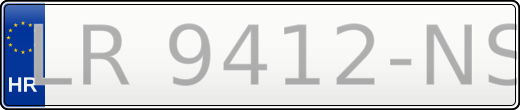 HR
Croatia
EU band
-
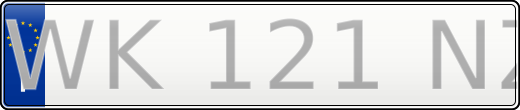 I
Italy
EU band
- IRL IRL Ireland EU band
-
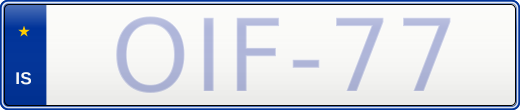 IS
Iceland
National band
-
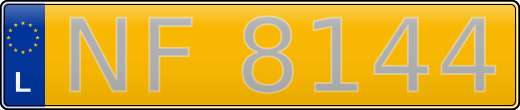 L
Luxembourg
EU band
-
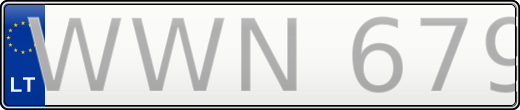 LT
Lithuania
EU band
-
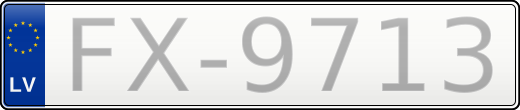 LV
Latvia
EU band
-
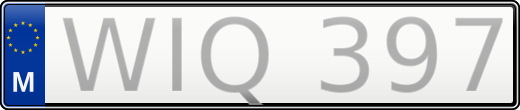 M
Malta
EU band
-
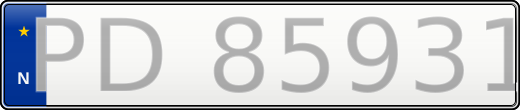 N
Norway
National band
-
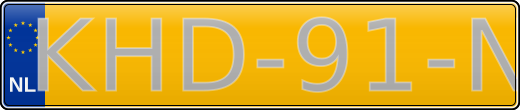 NL
Netherlands
EU band
-
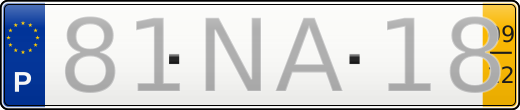 P
Portugal
EU band
-
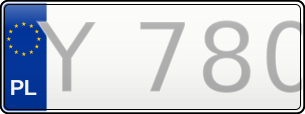 PL
Poland
EU band
-
 RO
Romania
EU band
-
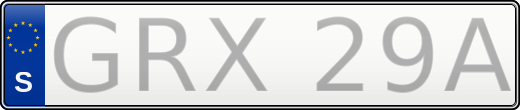 S
Sweden
EU band
-
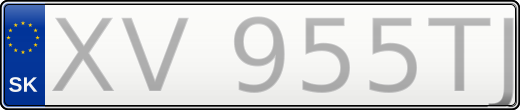 SK
Slovakia
EU band
-
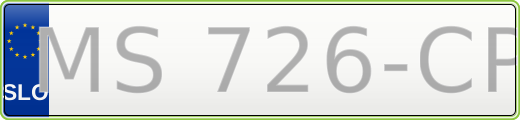 SLO
Slovenia
EU band
-
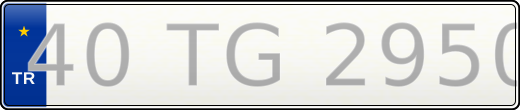 TR
Türkiye
National band
-
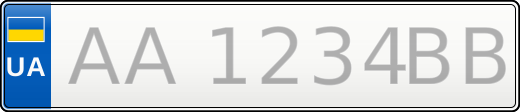 UA
Ukraine
National band
The same list as a table, including the countries whose plates carry no code:
Every European country A to Z by code (37 countries)
| Code | Country | On the standard plate |
|---|---|---|
| A | Austria | EU band |
| B | Belgium | EU band |
| CY | Cyprus | EU band |
| CZ | Czechia | EU band |
| D | Germany | EU band |
| DK | Denmark | EU band (optional) |
| E | Spain | EU band |
| EST | Estonia | EU band |
| F | France | EU band |
| FIN | Finland | EU band |
| GR | Greece | EU band |
| H | Hungary | EU band |
| HR | Croatia | EU band |
| I | Italy | EU band |
| IRL | Ireland | EU band |
| IS | Iceland | National band |
| L | Luxembourg | EU band |
| LT | Lithuania | EU band |
| LV | Latvia | EU band |
| M | Malta | EU band |
| N | Norway | National band |
| NL | Netherlands | EU band |
| P | Portugal | EU band |
| PL | Poland | EU band |
| RO | Romania | EU band |
| S | Sweden | EU band |
| SK | Slovakia | EU band |
| SLO | Slovenia | EU band |
| TR | Türkiye | National band |
| UA | Ukraine | National band |
| none | Andorra | No band |
| none | Liechtenstein | No band |
| none | Monaco | No band |
| none | San Marino | No band |
| none | Switzerland | No band |
| none | United Kingdom | National band (optional) |
| none | Vatican City | No band |
What the blue band is
The band is a blue field on the left of the plate with twelve yellow stars in a circle and the country's code in white below them. Austria's vehicle law, for example, describes it in exactly those words: "in einem blauen Feld mit zwölf gelben Sternen das internationale Unterscheidungszeichen in weißer Schrift" (§ 49 Abs. 4 KFG).
Its EU-wide specification is in Council Regulation (EC) No 2411/98 of 3 November 1998. Several countries' plate laws refer to it directly: Cyprus, Germany, Estonia, Finland, Croatia, Slovenia and Sweden among them. Others, like Austria and Poland, describe the band in their own words without the reference.
A few things about the codes that surprise people:
- Some codes have three letters: EST is Estonia, FIN Finland, IRL Ireland and SLO Slovenia.
- Some are one letter: D is Germany, E Spain, I Italy, A Austria.
- In Denmark the band is optional: it's chosen when the plate is issued (§ 68, stk. 5 of the Danish registration order, BEK nr. 663 of 2025), so a Danish plate without it isn't necessarily old.
- In Sweden the band counts as the country sign. The law asks for either an oval sticker with a black "S" or the band (TSFS 2015:63, chapter 7), so a car with the band needs no sticker.
Plates outside the EU band
Countries outside the EU either print their own band or none at all:
- A band of their own: Iceland (IS), Norway (N), Türkiye (TR), Ukraine (UA) and United Kingdom, optional
- No band: Andorra, Liechtenstein, Monaco, San Marino, Switzerland and Vatican City
- Norway prints its flag above the letter N on a blue field. It has been allowed since 1 November 2006 and is voluntary; a separate oval N sticker is the alternative (Kjøretøyforskriften § 39-12).
- Iceland is in the EEA but not the EU, so its plates carry the Icelandic flag and the letters IS instead of the stars.
- The United Kingdom no longer issues the EU band. A plate may only keep the GB band if it was fitted before the end of the Brexit transition period (S.I. 2001/561, regulation 16(3)), and the UK's international sign changed from GB to UK on 28 September 2021. New British plates may carry an optional identifier, such as UK with the Union flag, on the left.
- Liechtenstein puts its code on the plate itself: every plate starts with the letters FL (Art. 73 of its vehicle registration ordinance). Switzerland, by contrast, uses a separate oval sticker.
Countries without a band rely on the oval sign that the 1968 Vienna Convention on Road Traffic asks for on the back of a car driven abroad (Article 37): one to three black capital letters on a white ellipse (Annex 3).
Where these codes come from
Every code and band on this page is read from the plates dataset behind our license plates pages, which records each country's plate design with the regulation it comes from. The example plates show each country's current standard design. Plate sizes and colors have pages of their own: license plate dimensions and license plate colors.
Validate European plate numbers
If you're building something that handles European plates (a parking app, a fleet tool, a form), the same dataset knows each country's plate formats too. One call tells you whether a registration is valid for a country and which series it belongs to:
curl "https://vehiclesdb.com/api/v1/plates/nl/match" \
  -H "Authorization: Bearer vdb_sk_YOUR_KEY" \
  -H "Content-Type: application/json" \
  -d '{"plate": "12-GB-BD"}'
Every account starts with 100 free credits, and a match costs 1 credit. The car API page has the rest of what the API does, and you can browse every jurisdiction's plates for free.